
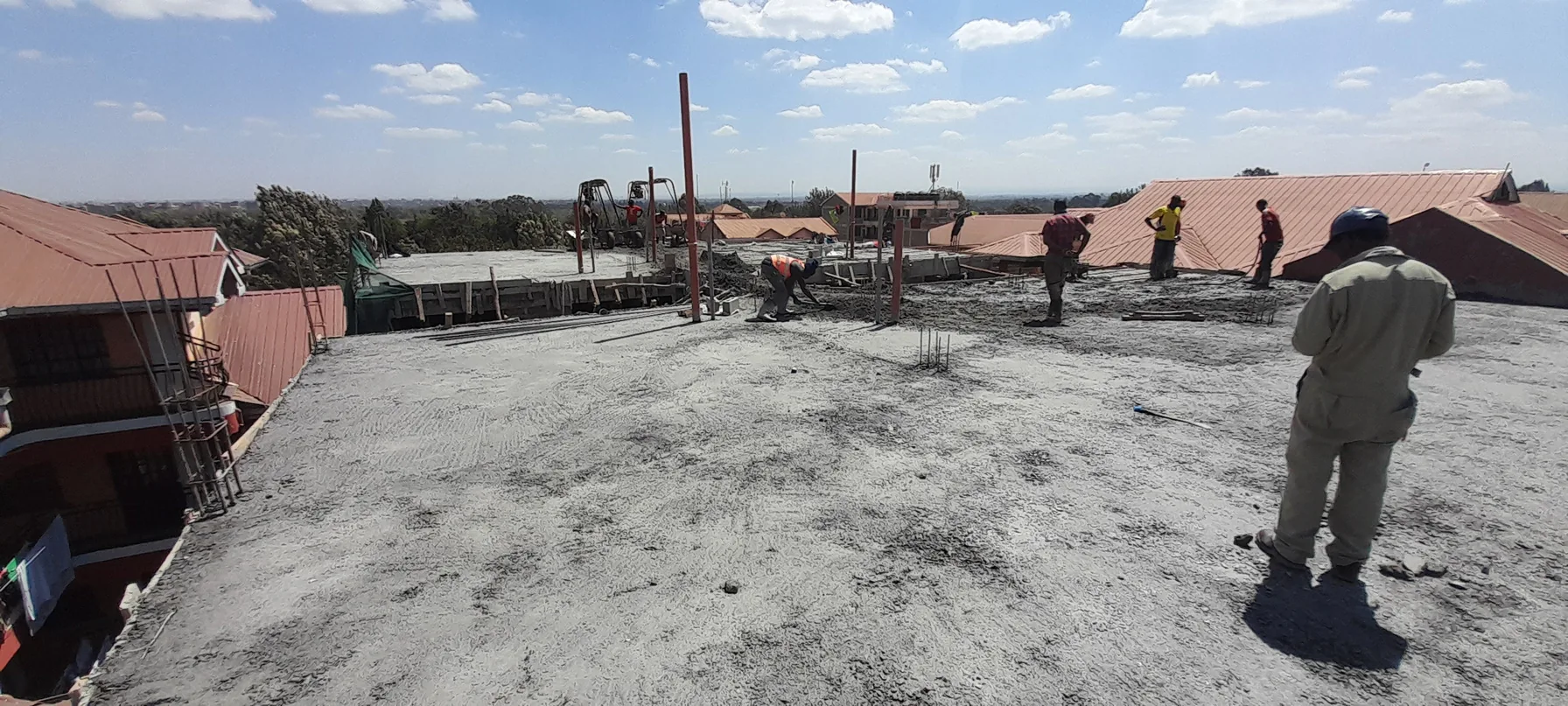
One of the biggest financial mistakes a client can make is paying too much money to a contractor before enough work has been completed.
Instead of releasing a large portion of the project budget upfront, payments are linked to agreed construction stages.
What is a stage-based construction payment?
A stage-based payment structure divides the project into identifiable milestones.
| Stage | Example Work |
|---|---|
| 1 | Mobilisation, excavation and foundations |
| 2 | Foundation walls and ground-floor slab |
| 3 | Walling, columns and first-floor structure |
| 4 | Roofing |
| 5 | Plumbing and electrical installations |
| 6 | Plastering, ceilings and floor finishes |
| 7 | Fixtures, painting and completion |
The contractor completes an agreed stage, the work is checked, and payment is then released according to the contract.
Why is paying a large amount upfront risky?
Contractors legitimately need some money to mobilise labour, equipment and materials.
The problem occurs when the advance payment is much larger than the value of the work being undertaken. If a contractor receives a large percentage of the contract sum before completing equivalent work, the client carries most of the financial risk.
If the contractor later delays, abandons the project or experiences financial problems, recovering that money can be difficult. Stage payments reduce this exposure.
Does stage payment mean paying only after everything is finished?
No. Construction requires ongoing cash flow.
The objective is not to starve the contractor of working capital. It is to create a payment structure where the contractor receives enough money to continue working while the client maintains financial control.
A project may therefore include:
- An agreed mobilisation payment
- Interim payments as work progresses
- Payments for major materials
- A final payment after completion
- Retention where appropriate under the contract
The exact arrangement should be clearly stated before work starts.
Who confirms that a stage has been completed?
Ideally, the payment should not depend only on the contractor saying “The stage is complete.”
Someone representing the client should verify the work. Depending on the project, this may be an architect, quantity surveyor, construction manager, project manager or engineer.
The assessment may consider:
- Percentage of work completed
- Quality of workmanship
- Materials delivered
- Compliance with drawings
- Outstanding defects
- Value of work completed
Only then should the next payment be authorised.
What happens when the client changes the design?
Changes should be documented as variations.
For example, if the original BOQ allows for standard ceramic tiles but the client later selects imported porcelain tiles, the additional cost should be clearly calculated.
Without proper variation records, disagreements can arise over whether additional payments were part of the original contract.
Does this help clients living abroad?
Stage-based payments are particularly useful when the client is overseas.
This provides a clearer record of where the money went and what construction progress it produced.
Can stage payments prevent every construction dispute?
No system eliminates every risk.
However, stage payments greatly improve transparency because they connect three important things:
At NovaForm Limited, we encourage clients to treat construction payments as part of the project's control system—not simply as transfers of money.
The objective
At every stage, the amount paid should make sense against the work actually completed.
Clear milestones, verification and documented payment recommendations create a stronger financial control system for the project.