
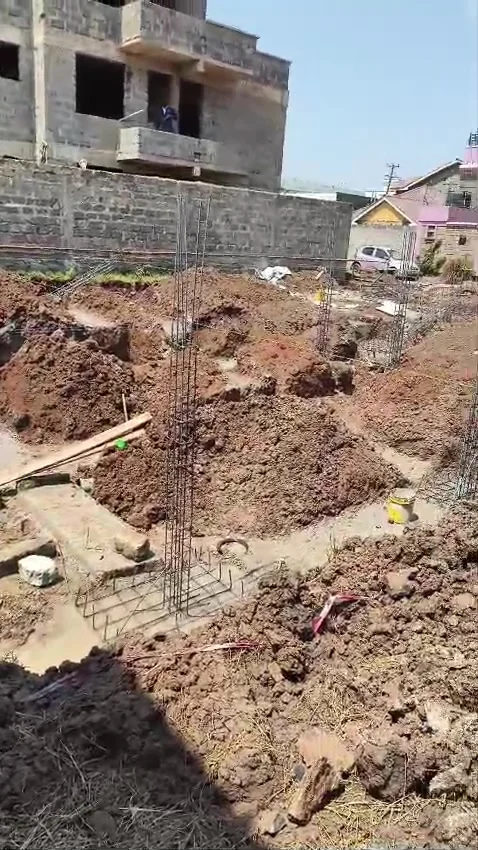
A Bill of Quantities (BOQ) is a detailed document that breaks a construction project into measurable items of work and assigns quantities to those items.
Instead of receiving a quotation that simply says “Construction of house – KSh 8,000,000”, a BOQ breaks the project into defined sections such as:
- Excavation
- Concrete
- Reinforcement
- Masonry
- Roofing
- Doors and windows
- Plumbing
- Electrical works
- Plastering
- Painting
- Floor finishes
- Sanitary fittings
Each item can then be measured and priced.
Why is a BOQ better than a lump-sum estimate?
Consider two contractor quotations:
| Quotation | What the client receives |
|---|---|
| Contractor A | “Build the house – KSh 7.5 million.” |
| Contractor B | A detailed breakdown showing quantities, unit rates and costs for each section of the project. |
Even if Contractor A is cheaper, you have very little information about what the KSh 7.5 million actually includes.
Does it include wardrobes? What type of windows? Which tiles? How many electrical points? What roofing material? Are sanitary fittings included?
A BOQ reduces these uncertainties because the scope is clearly documented.
Does a BOQ tell me the exact final cost?
It provides a much more reliable construction budget, but the final cost can still change.
Common reasons include:
- Design changes
- Material price changes
- Unexpected ground conditions
- Additional client requirements
- Changes to finishes
- Variations during construction
The advantage of having a BOQ is that these changes can be identified and priced separately instead of disappearing into an unclear overall figure.
How does a BOQ help when comparing contractors?
Without a BOQ, different contractors may be pricing completely different scopes.
One contractor may allow for aluminium windows while another assumes cheaper steel windows. One may include wardrobes while another excludes them. One may price high-quality tiles while another assumes basic finishes.
When contractors price the same BOQ, their quotations become much easier to compare. You can examine:
- Unit rates
- Labour costs
- Material allowances
- Contractor margins
- Major price differences
- Possible omissions
This allows the decision to be based on more than simply choosing the lowest total price.
How does a BOQ help during construction?
A BOQ is not only useful before construction. It can also be used to track expenditure and assess contractor payment claims.
If the contractor claims that a certain amount of concrete, masonry or plastering has been completed, the work can be measured against the quantities and rates contained in the BOQ.
Is a BOQ necessary for a small residential house?
For very small works, a simple schedule of materials and costs may sometimes be sufficient.
But once you are investing several million shillings in a house, a detailed BOQ becomes extremely valuable. The cost of preparing proper documentation is small compared with the financial risk of entering construction without knowing what the project should cost.
When should the BOQ be prepared?
Ideally:
Preparing the BOQ before the design is sufficiently developed can lead to inaccurate quantities and repeated revisions.
At NovaForm Limited, we treat the BOQ as one of the most important tools for creating transparency between the client, consultant and contractor.
Before choosing a contractor
First establish what exactly you are building — and what it should cost.
A detailed BOQ gives you a stronger basis for budgeting, tender comparison and financial control throughout construction.